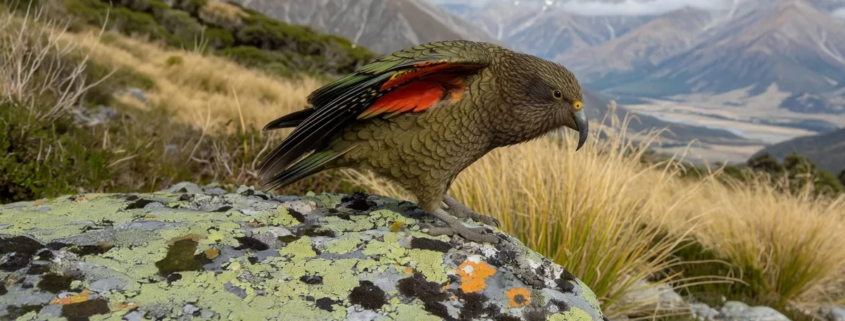
A critique of the research used to justify kea poisoning
J.C. Pollard, 30 August 2026. A critique of the radiotelemetry, nest monitoring and 2018 nest-survival study used to justify aerial 1080 poisoning of kea.

J.C. Pollard, 30 August 2026. A critique of the radiotelemetry, nest monitoring and 2018 nest-survival study used to justify aerial 1080 poisoning of kea.

December 2025 report by J. Pollard on possum-focused control of bovine tuberculosis in New Zealand, with recommendations on independent review, surveillance methods and policy.

Peer-reviewed paper by Joanna C. Pollard in the journal Conservation, 3 September 2025, on shifting New Zealand conservation from aerial poisoning to targeted, humane management.

New Zealand’s ecology has been profoundly altered by human settlement, habitat loss and introduced species. This article argues that effective conservation must begin with protecting habitat, understanding ecological relationships and using evidence-based management. It also examines the growing role of hunters in practical conservation, including wildlife monitoring, population management, track maintenance, pest control and the sustainable use of wild animal resources.

According to OSPRI, the organisation responsible for controlling bovine Tb, 10 years of research have demonstrated “that 1080 can be used to control pests without harming native birds” (Media release, 1/8/23).

Scientist Dr. Jo Pollard says DOC’s actions are negligent since previous DOC poisoning drops on the island, had devastating effects with several native bird species being slashed in numbers.
We are a dedicated group of independent scientists who are passionate about New Zealand and maintaining our diverse ecosystem. We would welcome any donations to help maintain our website and our efforts towards eliminating 1080 from our environment.

On April 2, like a belated April Fool’s joke, the Otago Daily Times reported that NZ’s Department of Conservation (DoC) intended to poison a large chunk of virgin rainforest in Fiordland this month.

In 1979 scientist Eric Spurr warned that wide scale poisoning of New Zealand with compound 1080, intended to kill introduced mammals, was actually killing kea and many other animals. It took decades before NZ’s Department of Conservation (DoC) finally began to monitor kea deaths from 1080 poisoning.
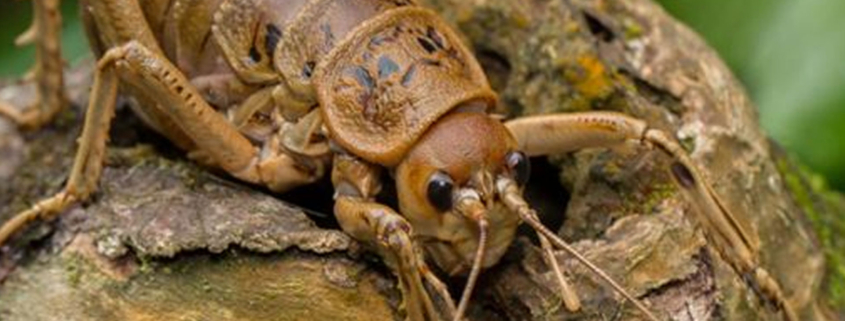
Insects were in the media spotlight earlier this year due to a review published in the journal Biological Conservation. The review showed that insect populations worldwide are declining dramatically, largely due to habitat destruction and pesticides. Their importance in ecological systems, as food for other animals, pest controllers, recyclers and pollinators was spelt out.