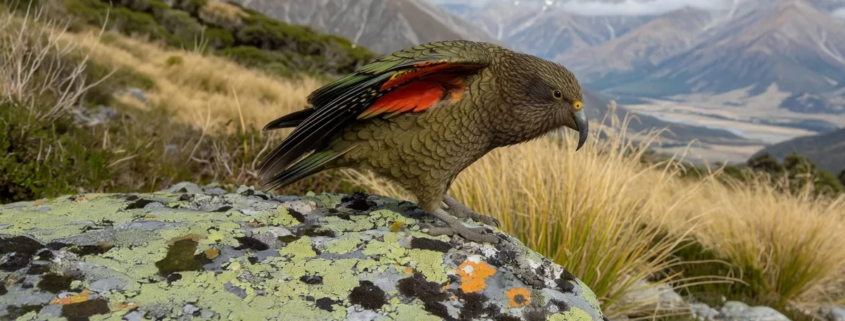
A critique of the research used to justify kea poisoning
J.C. Pollard, 30 August 2026. A critique of the radiotelemetry, nest monitoring and 2018 nest-survival study used to justify aerial 1080 poisoning of kea.

Independent scientific reviews of 1080 poison
J.C. Pollard, 30 August 2026. A critique of the radiotelemetry, nest monitoring and 2018 nest-survival study used to justify aerial 1080 poisoning of kea.
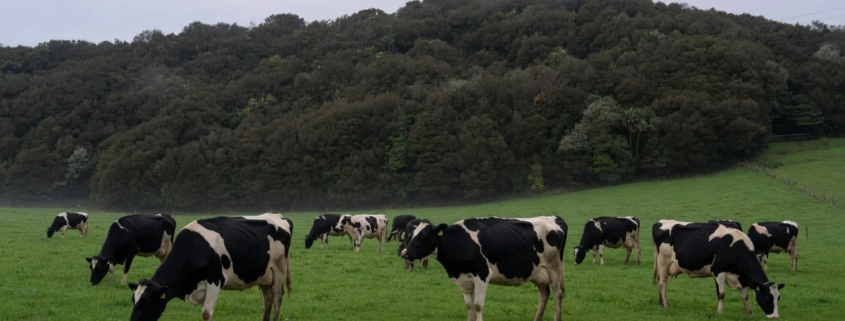
December 2025 report by J. Pollard on possum-focused control of bovine tuberculosis in New Zealand, with recommendations on independent review, surveillance methods and policy.
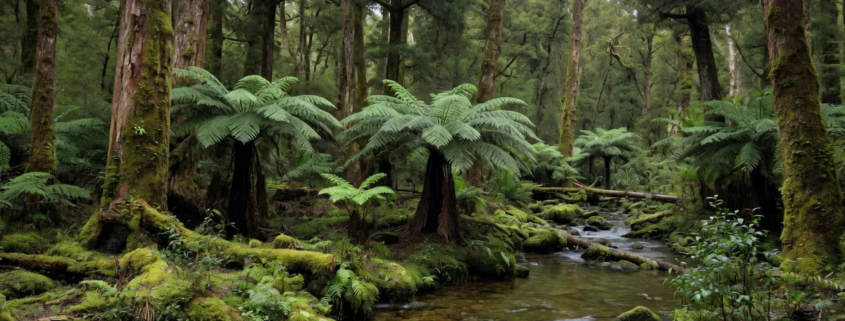
Peer-reviewed paper by Joanna C. Pollard in the journal Conservation, 3 September 2025, on shifting New Zealand conservation from aerial poisoning to targeted, humane management.

New Zealand’s ecology has been profoundly altered by human settlement, habitat loss and introduced species. This article argues that effective conservation must begin with protecting habitat, understanding ecological relationships and using evidence-based management. It also examines the growing role of hunters in practical conservation, including wildlife monitoring, population management, track maintenance, pest control and the sustainable use of wild animal resources.

This report explores the challenges of balancing conservation and economic development under New Zealand’s Resource Management Act. It outlines proposed reforms to ensure transparent governance and better management of Crown lands for the benefit of all New Zealanders.

Under New Zealand’s Hazardous Substances and New Organisms (HSNO) Act (1996), the major aerial spreaders of sodium monofluoroacetate (“1080” poison) (the Animal Health Board and the Department of Conservation) were required to apply to the Environmental Risk Management Authority (ERMA), for permission to continue.

A review of the Department of Conservation’s (DoC’s) consultation with Māori on the aerial use of 1080 poison. Most Māori participants felt uncomfortable with the use of poisons in the environment, protecting the forest biodiversity, while the poison was contradictory to fundamental Māori beliefs.

1 August 2019
Mr Mike Slater
Deputy Director-General (Operations)
Department of Conservation
Conservation House
P.O. Box 10420
Wellington 6143
Dear Mr Slater
Re: Poisoning of Arthurs Pass National Park
You have given consent for the business “Vector Control Services” to aerially poison Arthurs Pass National Park, including places that have not been poisoned before, primarily to control rats in order to protect kakariki.
Your department’s most recent monitoring indicates that according to its own target, no poisoning is necessary.
Furthermore the consent application (supplied by OIA request 20/06/19) gave you no substance upon which to base your decision. It failed to reference any of its claims of benefit. It also failed to discuss relevant risks and unknowns (e.g. 1080 persistence in cold water) and known adverse effects such as sub-lethal damage (e.g. birth defects, reproductive damage). It ignores many relevant details regarding the ecology of the area and responses to aerial poisoning.
Because of these deficiencies, your consent breaches the Hazardous Substances and New Organisms Act 1986 (in at least Sections 5, 6, 7 and 95A (Part 3)).
Details:
Please will you confirm that you have received this letter and have considered the topics raised? I trust that given the demonstrable lack of reason, thought or legality that underlie the poisoning operation it will be cancelled and the deadly bait will be disposed of as safely as possible.
Yours sincerely

Dr Jo Pollard (BSc (Hons), PhD)
References:
Arcese, P., Smith, J.M., 1988. Effects of population density and supplemental food on reproduction in song sparrows. Journal of Animal Ecology 57: 119-136.
Beausoliel, N., Fisher, P., Warburton, B., Mellor, D., 2010. How humane are our pest control tools? (09-11326). MAF Biosecurity New Zealand Technical Paper no: 2011/01. 149 pp.
Bond, A., Diamond, J., 1992. Population estimates of Kea in Arthur’s Pass National Park. Notornis 39: 151-160.
Brown, K., Elliott, G., Innes, J. & Kemp, J., 2015. Ship rat, stoat and possum control on mainland New Zealand. An overview of techniques, successes and challenges. Department of Conservation report. 40 pp.
DoC, 2002a. Rare Bits 44, April 2002
DoC, 2002b. Rare Bits 45, June 2002
DoC, 2003. Rare Bits 49, June 2003
Eason, C., Miller, A., Ogilvie, S., Fairweather, A., 2011. An updated review of the toxicology and ecotoxicology of sodium fluoroacetate (1080) in relation to its use as a pest control tool in New Zealand. New Zealand Journal of Ecology 35(1): 1-20.
Elliott, G., Kemp, J., 1999. Conservation ecology of kea (Nestor notabilis). WWF-NZ Final Report 1 August 1999, 64 pp.
Elliott, G., Suggate, R. 2007. Operation Ark. Three year progress report. Department of Conservation.
ERMA, 2007. Environmental Risk Management Authority’s Reassessment of 1080, Application HRE05002.
Fairweather, A., Broome, K., Fisher, P., 2015. Sodium fluoroacetate pesticide information review. Department of Conservation Report Docdm-25427. 103 pp.
Fisher, P. & Airey, A.T., 2009. Factors affecting 1080 pellet bait acceptance by house mice
(Mus musculus). Department of Conservation DOC Research & Dev Series 305-308 Feb-March.
Griffiths, J.W., Barron, M.C., 2016. Spatiotemporal changes in relative rat (Rattus rattus) abundance following large-scale pest control. New Zealand Journal of Ecology 40(3): 371-380.
Harper, P., 2012. DOC shocked five Kea shot dead. Nestor Notabilis 6: 24.
Jackson, J.R., 1960. Keas at Arthurs Pass. Notornis IX: 39-58 .
Jackson, J.R., 1969. What do keas die of? Notornis 16: 33-44.
Kemp, J., Cunninghame, F., Barrett, B., Makan, T., Fraser, J., Mosen, C., 2015, unpublished. Effect of an aerial 1080 operation on the productivity of the kea (Nestor notabilis) in a West Coast rimu forest. Department of Conservation report. 15 pp.
Kemp, J.R., Mosen, C.C., Elliott, G.P., Hunter, C.M., 2018. Effects of the aerial application of 1080 to control pest mammals on kea reproductive success. New Zealand Journal of Ecology 42: 158-168.
King, C. & Murphy, E., 2005. Stoat. Pp. 204-221. In. C.M. King (Ed). The Handbook of New Zealand Mammals (2nd Edition). Oxford University Press, Melbourne.
Kisner, J., 2016. Man V. Rat: Could the long war soon be over?
https://www.theguardian.com/science/2016/sep/20/man-v-rat-war-could-the-long-war-soon-be-over
Nilsson, S.G., 1984. The evolution of nest-site selection among hole-nesting birds: The importance of nest predation and competition. Ornis Scandinavica 15: 167-175.
Northcott, G., Jensen, D., Ying, L., & Fisher, P., 2014. Degradation rate of sodium fluoroacetate in three New Zealand soils. Environmental Toxicology and Chemistry 33: 1048-1058.
O’Donnell, C.F.J. & Hoare, J.M., 2012. Quantifying the benefits of long-term integrated pest control for forest bird populations in a New Zealand temperate rainforest. New Zealand Journal of Ecology 36: 131-140.
Pollard. J.C., 2016. Aerial 1080 poisoning in New Zealand: Reasons for concern.
https://www.researchgate.net/publication/308712508_Aerial_1080_poisoning_in_New_Ze aland_Reasons_for_concern 17 pp.
Pollard, J.C., 2017. Response to the Department of Conservation’s reply to “Aerial 1080 poisoning in New Zealand: reasons for concern”. 17 pp.
Pollard, J.C. 2019. https://1080science.co.nz/science-against-1080/
Ruscoe, W., Murphy, E., 2005. Pp 204-221. In King, C.M. (Ed.). The Handbook of New Zealand Mammals (2nd Edition). Oxford University Press, Melbourne. 610 pp.
Ruscoe, W.A., Ramsey, D.S.L., Pech, R.P., Sweetapple, P.J., Yockney, I., Barron, M.C., Perry, M., Nugent, G., Carran, R., Warne, R., Brausch, C. & Duncan, R.P., 2011. Unexpected consequences of control: Competitive vs. predator release in a four-species assemblage of invasive mammals. Ecology Letters 14: 1035-1042.
Roy, E.A., 2016. New Zealand kea, the world’s only alpine parrot, faces extinction
https://www.theguardian.com/world/2016/sep/21/new-zealand-kea-the-worlds-only-alpine-parrot-faces-extinction
Ruscoe, W.A., Ramsey, D.S.L., Pech, R.P., Sweetapple, P.J., Yockney, I., Barron, M.C., Perry, M., Nugent, G., Carran, R., Warne, R., Brausch, C., Duncan, R.P. 2011. Unexpected consequences of control: Competitive vs. predator release in a four-species assemblage of invasive mammals. Ecology Letters 14: 1035-1042.
Smith, D., Jamieson, I.G., 2003. Movement, diet, and relative abundance of stoats in an alpine habitat. New Zealand Department of Conservation Science Internal Series 107, 16 pp.
Veltman, C.M., Westbrooke, I.M., Powlesland, R.G. & Greene, T.C., 2014. A principles-based decision tree for future investigations of native New Zealand birds during aerial 1080 operations. New Zealand Journal of Ecology 38: 103-109.
Whiting-O’Keefe, Q.E., Whiting O’Keefe, P.M., 2007. Aerial Monofluoroacetate in New Zealand’s Forests. An appraisal of the scientific evidence. http://1080science.co.nz/wp-content/uploads/2016/06/Whiting-Okeefe-2.pdf 88 pp.

Will NZ’s Department of Conservation win against rodents and stoats with 1080 poison? Scientist Dr Jo Pollard puts the counter view.
The New Zealand government’s Department of Conservation (DoC) is responsible for managing our land and natural resources for the purposes for conservation.
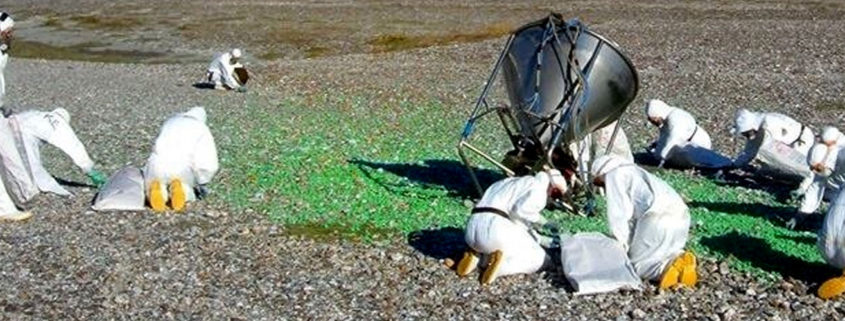
A recent review highlighting several reasons for concern regarding the New Zealand Government’s policy of widespread aerial poisoning with sodium monofluoroacetate (1080), was sent to several Government ministers and staff (in August 2016).
A letter in reply, in support of the ongoing use of 1080, was received from the Department of Conservation (DoC). The letter claims that there is foundational evidence aerial 1080 poisoning is ‘safe’, will retain its efficacy against rats throughout repeated applications, has desirable biodiversity outcomes, and that there are no current alternatives to its continued use. These claims are refuted based on documented evidence.
Further, examination of documents concerning the management of two species, kea (Nestor notabilis) and mohua (Mohoua ochrocephala), reveals no scientific, ecological basis supporting pest control by DoC. There is an urgent need to review conservation management in New Zealand.