
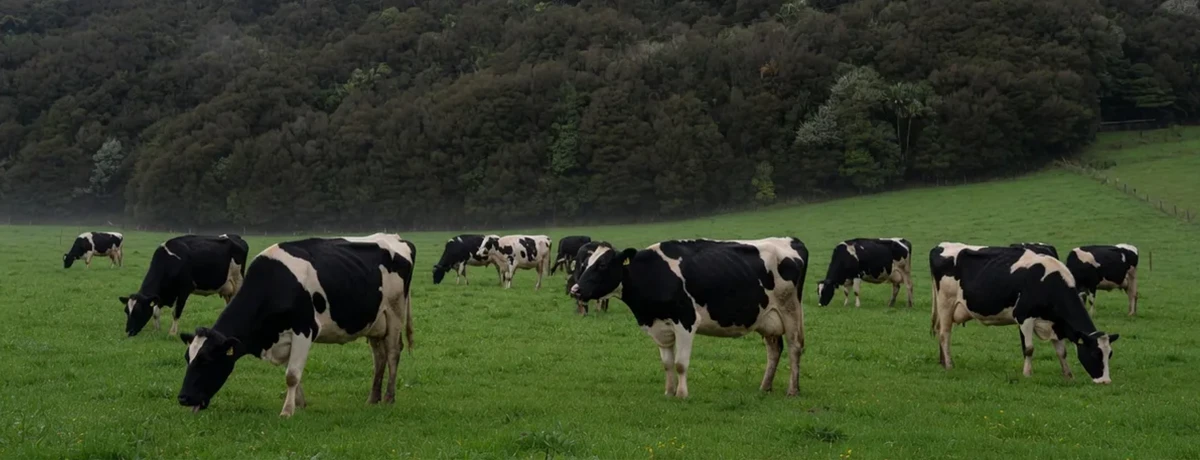
 Report, December 2025, on bovine tuberculosis in New Zealand. Convenor of the investigating group: Mr G. Guenole. Author: J. Pollard (BSc (Hons), PhD).
Report on killing wildlife to control bovine tuberculosis in New Zealand
In 2024/5 a group with longstanding concerns about bovine tuberculosis management in New Zealand examined the possum-focused policy. The group comprised an ecologist, a dairy farmer, a veterinary pathologist, a zoologist, a former New Zealand Forest Service employee, a former regional councillor, a professional trapper and two hunters. This page carries their summary and recommendations. The full report, including the evidence, tables, references and appendices, is in the PDF.
Download the full report (PDF)
Summary and recommendations
Since the 1970’s, New Zealand (NZ) taxpayers and farmers have been paying for the lethal control of introduced Australian brushtail possums (Trichosurus vulpecula), claimed to be the main wildlife reservoir of bovine tuberculosis (Mycobacterium bovis (Tb)) and vector of the disease to cattle and deer on farms.
Possum control includes wide scale aerial poisoning campaigns with negative effects including animal suffering, deaths of native wildlife, an enduring risk to dogs in carcasses, and increasing rodent populations.
In 2025, NZ’s livestock have been internationally (World Organisation for Animal Health) qualified as Tb free for over 10 years. Nevertheless the country is facing years of poisoning in pursuit of complete Tb eradication, which may not be feasible through targeting possums due to its widespread presence in a range of mammalian wildlife.
The Tb control strategy’s focus on killing possums has been criticised on both veterinary and economic grounds, and predictions from its underlying mathematical modelling, based on assumptions and sparse data, may be incorrect.
Review, transparency, measurement and an evidential, science-based strategy are needed. Consideration of Tb management techniques used in other countries such as France, which has a similar situation to NZ, is advised.
Recommendations
1. Independent reviews
- Costs, benefits and risks of attempting bovine Tb eradication in NZ wildlife.
- Epidemiological examination of OSPRI-funded Landcare Research studies on bovine Tb in wildlife in Westland.
- All government and government-funded reports and data on bovine Tb in farmed cattle and deer, and wildlife, to be made available for public review.
2. Methodology
- PCR testing and/or other improved techniques to be used in Tb surveillance.
- Bovine Tb lesions reported in slaughtered livestock to be differentiated, quantified and reported as either infectious or inert and the source herds followed up and managed accordingly.
- The prevalence of bovine Tb to be surveyed in all mammalian wildlife.
3. Policy
- Strong support for farm-based management of bovine Tb, including recognition of the importance of animal welfare such as nutrition and shelter, and environmental contamination.
- Change the Biosecurity Act to require direct epidemiological evidence that bovine Tb exists in targeted wildlife in an area before control is applied.
- Legislation to address bovine Tb biosecurity in killed wild and feral animals, including pigs and deer.
- Humane, science-based wild animal surveillance and control, managed and assisted by all stakeholders.
What the full report covers
- Introduction
- The focus on possums
- Current issues: poor quantification, poor control over risk factors, and the feasibility of eradicating Tb from wildlife
- Alternative management, including the approach used in France
- References
- Appendix 1. History of possum-focused control of bovine Tb in New Zealand, with its own references
Related reading on this site
- Tb, from the ERMA index
- Towards ethical and effective conservation of New Zealand’s natural heritage (peer-reviewed paper, Conservation, 3 September 2025)
- Managing wild animal populations without the cruelty of 1080
Latest 1080 Science Press Releases
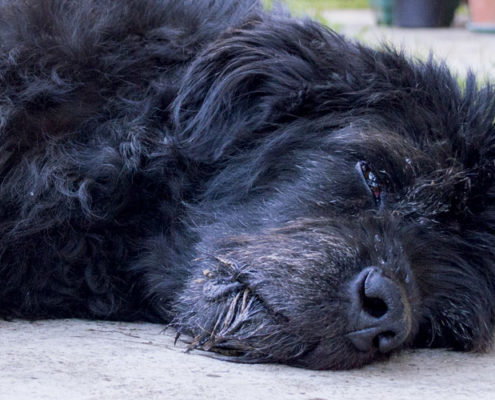 https://1080science.co.nz/wp-content/uploads/2011/02/Dog-poisoned-by-1080-1.jpg
500
1700
Dr J.C. Pollard, BSc (Hons), PhD, Zoology
http://1080science.co.nz/wp-content/uploads/2013/04/logo1-300x79.jpg
Dr J.C. Pollard, BSc (Hons), PhD, Zoology2011-02-16 02:28:192019-07-02 23:10:30At least 65 dogs in a year poisoned by 1080 in New Zealand
https://1080science.co.nz/wp-content/uploads/2011/02/Dog-poisoned-by-1080-1.jpg
500
1700
Dr J.C. Pollard, BSc (Hons), PhD, Zoology
http://1080science.co.nz/wp-content/uploads/2013/04/logo1-300x79.jpg
Dr J.C. Pollard, BSc (Hons), PhD, Zoology2011-02-16 02:28:192019-07-02 23:10:30At least 65 dogs in a year poisoned by 1080 in New Zealand
